Marcela Ruiz: “If the Ocean’s Health is at Risk, So Is Ours”
Marcela Ruiz is a Marine Biologist from the Universidad Austral de Chile and holds a Master’s degree in Strategic Management and Project Evaluation. With over eight years of experience in productive development and strategic management, she previously served as the Development and Innovation Manager at Clean Energy. She is currently the Director of Acústica Marina, a hydroacoustic technology company led by women and headquartered in Valdivia.
In this new «Women of the Sea» interview, we learned more about her journey, motivations, and challenges in leading a company that develops technological solutions for environmental issues.
Why Should We Be Concerned About Acoustic Pollution in the Ocean?
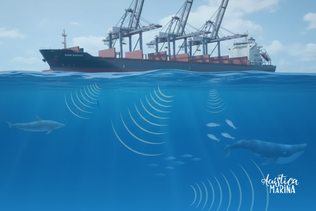
Any type of pollution—whether on land, in the atmosphere, or in water—should concern us because it disrupts ecosystems. Regarding acoustic pollution in the ocean, it is particularly alarming because it masks the biological sounds that many species rely on for communication. Cetaceans, one of the most studied groups in this regard, are heavily affected, but smaller marine fauna, such as invertebrates, also suffer.
If marine life is unhealthy, the health of our seas and oceans is at risk, which in turn threatens our own well-being in the medium and long term. We must remember the essential role these bodies of water play in our planet’s sustainability.
How Can Monitoring Ocean Sounds Help Conservation?
Measuring sound pressure levels allows us to establish regulatory frameworks that define how much acoustic energy human-made sources can emit and what levels are tolerable. This highlights the importance of a globally traceable data monitoring system, using calibrated equipment to ensure accurate measurements.
Additionally, making these data open and accessible is crucial for researchers, regulators, and other stakeholders. This is the present and future we are moving toward. Our approach is to work with cutting-edge technology that enables real-time data analysis while adhering to international traceability standards.

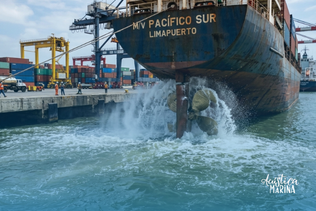
Cavitación de hélices: 4 errores comunes que generan ruido submarino en barcos peruanos
Descubre los 4 errores más frecuentes de cavitación de hélices que aumentan el ruido submarino en embarcaciones de puertos y…SEL en ruido submarino: cómo medirlo para aprobar tu EIA en SENACE Perú
Descubre qué es el SEL (Sound Exposure Level) en ruido submarino, cómo se mide y por qué es clave para…Redes PAM: cómo instalar monitoreo acústico en Áreas Marinas Protegidas peruanas
Descubre cómo implementar redes de monitoreo acústico pasivo (PAM) en Áreas Marinas Protegidas del Perú. Boyas inteligentes, PAM real-time y…10 estrategias probadas para reducir ruido submarino en puertos y minas de Perú
Conoce 10 estrategias para reducir ruido submarino en puertos, terminales mineros y obras costeras del Perú. Mejora tu EIA marina,…